
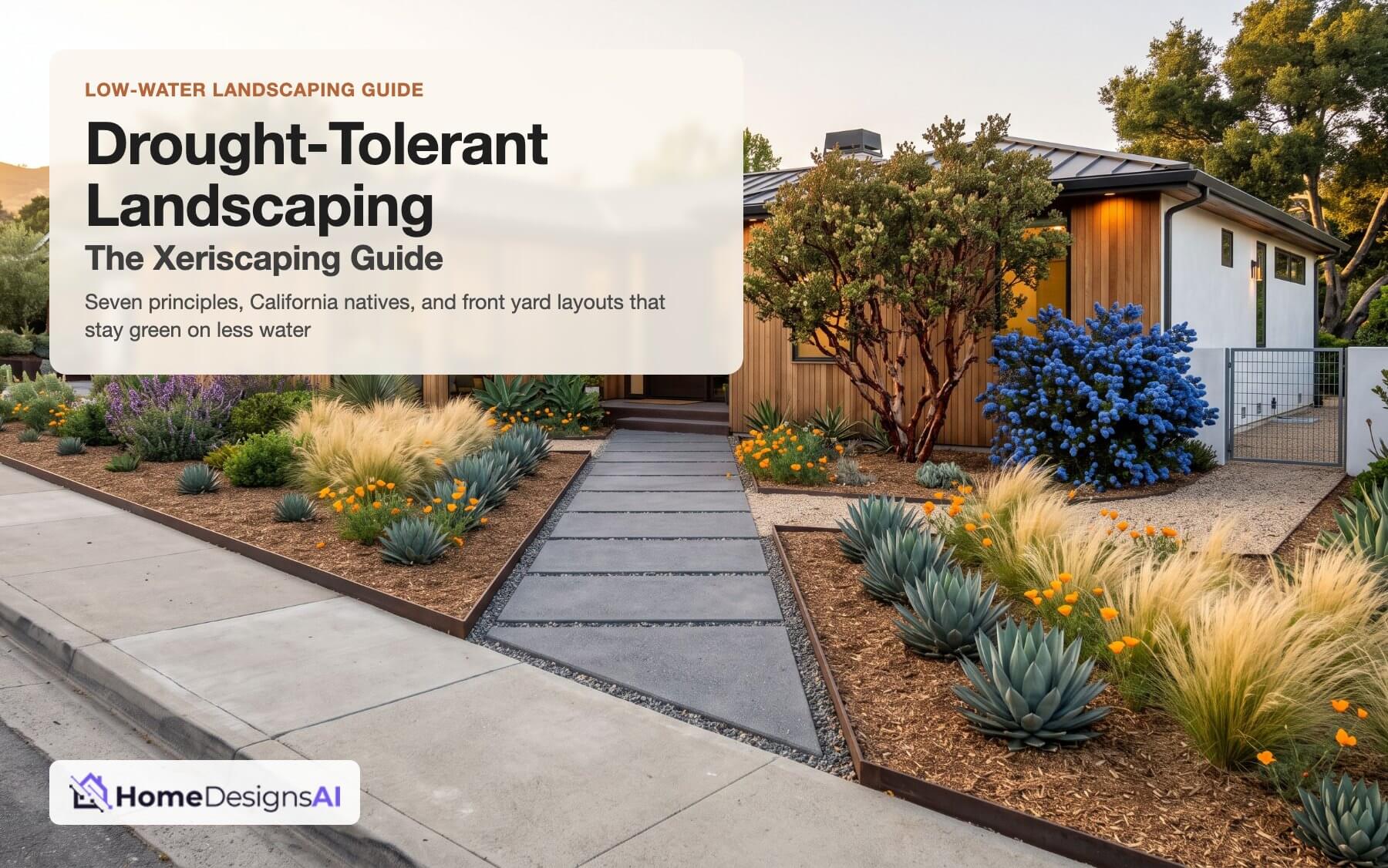
A regular lawn looks nice when it’s green. But keeping it that way means watering it constantly. Drought-tolerant landscaping is a way around that. You still get a yard with real structure, real color, something that holds up in the heat or when water rules kick in.
It works by mixing the right plants with better moisture retention and smarter irrigation. Get it right and the yard still looks good years later, not just for one summer.
What Is Drought-Tolerant Landscaping?
Xeriscaping is basically a design method built around using less water. That covers plant choice, soil prep, irrigation, and how you lay out the space in the first place. Our Front Yard Landscaping Ideas guide has more on layout if that’s where you want to start.
Drought-tolerant landscaping ends up looking pretty different from house to house. It depends on your architecture, your climate, what you like. Pick the right plants and you can still get full, colorful flower beds, not a bare yard. It shows up most in places with actual water restrictions, but here’s the thing: drought-tolerant landscaping ideas don’t mean gravel everywhere and a row of cacti. That’s a myth.
The Core Principles of Xeriscaping
Good planning starts with a clear order. Xeriscaping has seven basic principles, and they roughly go like this:
- Planning. Look at the site first. Sun, slope, what the plants actually need. Everything else builds off this.
- Soil. Prep it right and it holds water better. Less evaporation, less runoff.
- Irrigation. Drip lines beat sprinklers. Water goes exactly where it’s needed instead of getting wasted.
- Mulch. A good layer keeps moisture in the soil and gives roots a more stable environment.
- Plants. Pick species that actually suit your climate. Looks matter, but real water needs matter more.
- Lawn. Shrink it down to what you actually use for grass. Fill the rest with beds and low water options.
- Care. Even a drought-tolerant yard needs watering, pruning, seasonal attention. It’s not zero maintenance.

Drought-Tolerant California Native Plants for Landscaping
California has a huge range of native plants that handle drought well. A few groups show up again and again in drought-tolerant California native plants landscaping projects. Our Desert Garden Ideas gallery has more examples if you want to see them in context.
- Grasses. Deer grass, California fescue. They add texture and height, and they fit both natural and more structured yards.
- Perennials. California poppy and yarrow bring color without going overboard, and they come back season after season.
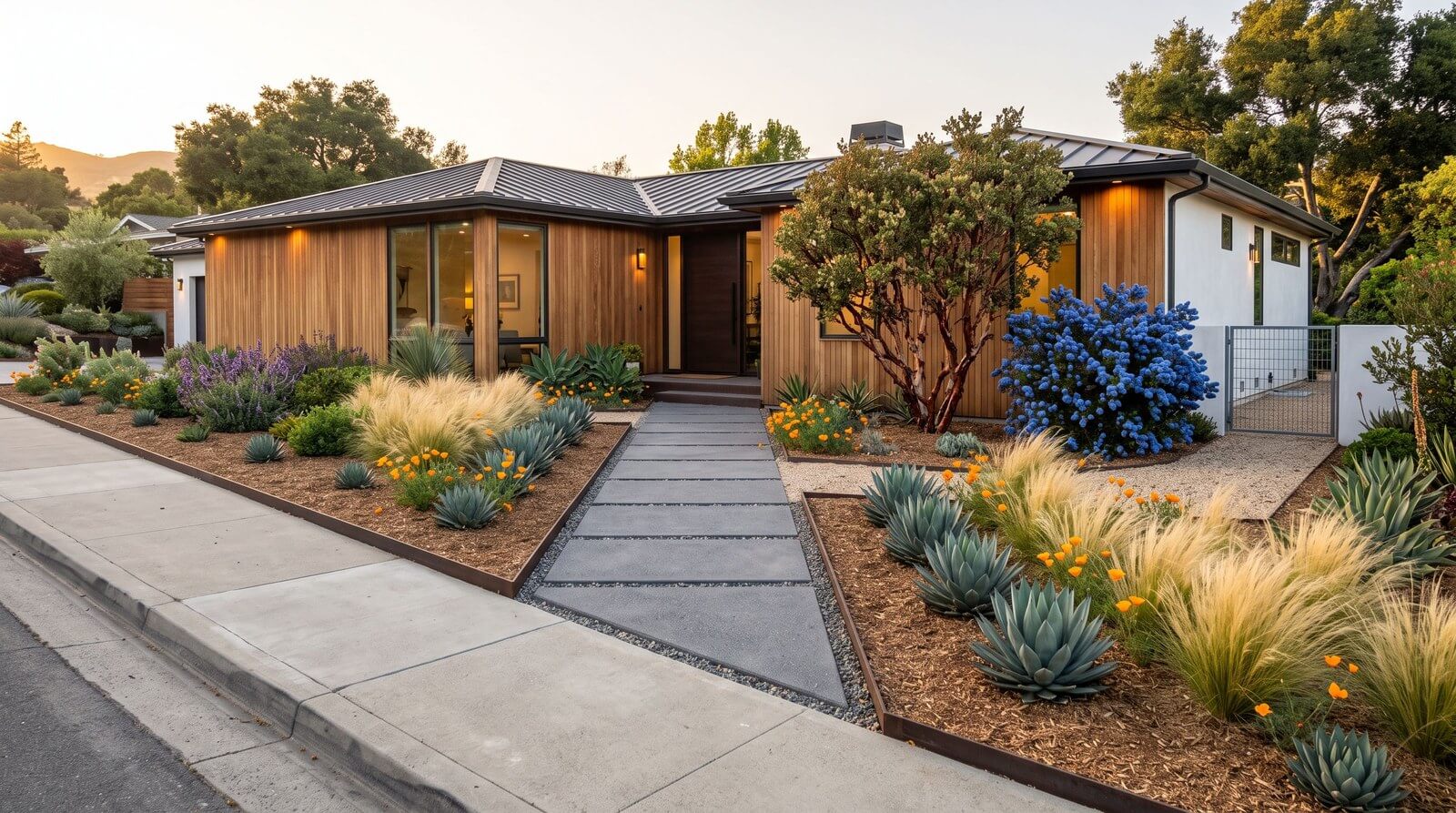
- Shrubs. Manzanita, ceanothus. These build the actual structure of the garden and add real volume. Pairing shrubs with grasses is one of the more reliable combinations if you want something that looks good year round in a drought-tolerant California native plants landscaping setup.
Modern Front Yard Drought-Tolerant Landscaping
Modern architecture pairs well with clean, geometric planting. Our Desert House Exterior Ideas gallery uses a small plant palette, sharp bed edges, and blocks of the same plant repeated across the yard.
Modern front yard drought-tolerant landscaping usually means fewer plant types, just arranged more deliberately. More open space between groupings too. The whole thing reads more like a composition than a garden, which is exactly why modern front yard drought-tolerant landscaping works so well with modern or mid century homes. Straight lines, simple shapes, materials that echo the house. That combination keeps a front yard from feeling busy or overloaded.
Inexpensive Drought-Tolerant Landscaping
A low water yard doesn’t have to look cheap, even out front. The most budget friendly move behind inexpensive drought-tolerant landscaping is replacing your lawn gradually. Section by section, not all at once.
Start with the parts of the yard you barely use. Inexpensive drought-tolerant landscaping usually breaks down into a few steps:
- Spread the cost out instead of redoing everything in one go
- Buy smaller, younger plants, they cost less and still fill in fine
- Think long term. The savings show up over time, not immediately
A few seasons in, the lower water bill and lower plant costs start adding up. Most people end up saving real money on top of just having a better looking yard.
Drought-Tolerant Front Yard Layout Ideas
A well planned front yard doesn’t need to be all stone. Mixing gravel or stone sections with plant beds, in the right proportion, still looks intentional and cuts water use a lot. It doesn’t read as empty either, just balanced. Among drought-tolerant landscaping ideas, this kind of mix tends to be the most practical for a front yard that still needs to look welcoming.
A cohesive look usually comes down to repeating a handful of plants across the yard instead of using a different one everywhere. That repetition reads as intentional, and honestly it makes upkeep easier too, fewer species to manage. An AI landscape design tool can help you test a layout like this before committing to it, so you can see how a repeated planting scheme actually looks in your own yard. Out of all the drought-tolerant front yard landscaping ideas out there, the ones that hold up best are usually the ones that tie the whole front of the house together.
Common Drought-Tolerant Landscaping Mistakes to Avoid
Drought-tolerant doesn’t mean no water, especially early on. In the first season or two, these plants still need regular watering while the roots establish. Choosing drought-tolerant California native plants landscaping that looks good and actually saves water long term is worth the extra homework upfront.
A few things worth watching for:
- Watering can taper off once roots are established, but overwatering early on works against you
- Watering a drought-tolerant bed on the same schedule as your lawn kills a lot of the benefit
- Each zone should get water based on what its plants actually need, not one blanket schedule
- Mulch is still one of the easiest ways to help soil hold moisture, worth remembering with any drought-tolerant front yard landscaping ideas you try
Frequently Asked Questions
Does drought-tolerant landscaping mean no lawn at all?
No. You don’t have to get rid of the lawn completely, just shrink it to what you use and fill the rest with plants, mulch, or gravel.
How much water can xeriscaping actually save?
Depends on your climate and how much lawn you’re replacing. A smaller lawn plus smart zoning usually gives the biggest results.
What are the easiest drought-tolerant plants for beginners?
Stick with plants that suit your local climate. Native grasses, perennials, and shrubs are usually the easiest starting point.
Is drought-tolerant landscaping more expensive to install than a lawn?
It varies. Could be higher upfront, could be lower, depends on scale and materials. Either way it usually pays off within a few seasons.
Can drought-tolerant landscaping look lush, not just rocky?
Yes. The right mix of grasses, flowering perennials, and shrubs looks full and colorful, not sparse or rocky at all.
How long does it take drought-tolerant plants to establish?
Usually a couple of seasons for the root system to develop. During that time they still need regular, adequate watering.
See Your Drought-Tolerant Yard Before You Plant Anything
Reading about xeriscaping principles helps, but it won’t tell you how a layout actually looks on your own front yard. The fastest way to know is to see it.
Upload a photo of your yard to HomeDesignsAI and get a realistic drought-tolerant landscaping render in about 30 seconds. Your house, driveway, and structure stay the same, only the landscaping changes. Test a modern gravel layout or a native plant scheme before spending anything on materials.
Try it free, upload a photo of your yard now and see your drought-tolerant redesign before you plant a single thing.